Blog about traditional music all over the world
Year: 2022

Styles of Music

Baroque Style For its time, Baroque was crazy and uninhibited. The music of this period is emotional and filled with little frills and decorations that shocked and amazed its listeners. Baroque was often fast paced with great and quick use of scales and violent changes in volume and melody. Today you might not think of it as an exciting type of music, but if you compare it to the Classical style you can tell immediately that baroque did have more action in its pieces. Some say the greatest composer of all time wrote in this period: Johann Bach.

Classical Style We wish we could have found this on our own, but a book we researched with (Classical Music for Everybody) had the perfect quote to explain what music of the Classical style was like, and we’d like to reprint that here:
Music in the Renaissance

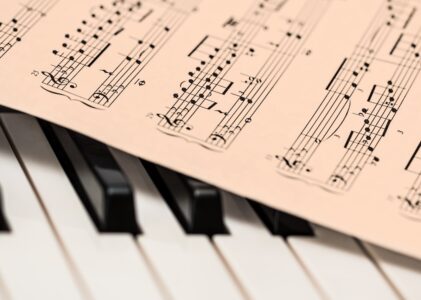
Music was an essential part of civic, religious, and courtly life in the Renaissance. The rich interchange of ideas in Europe, as well as political, economic, and religious events in the period 1400–1600 led to major changes in styles of composing, methods of disseminating music, new musical genres, and the development of musical instruments. The most important music of the early Renaissance was composed for use by the church—polyphonic (made up of several simultaneous melodies) masses and motets in Latin for important churches and court chapels. By the end of the sixteenth century, however, patronage had broadened to include the Catholic Church, Protestant churches and courts, wealthy amateurs, and music printing—all were sources of income for composers.

The early fifteenth century was dominated initially by English and then Northern European composers. The Burgundian court was especially influential, and it attracted composers and musicians from all over Europe. The most important of these was Guillaume Du Fay (1397–1474), whose varied musical offerings included motets and masses for church and chapel services, many of whose large musical structures were based on existing Gregorian chant. His many small settings of French poetry display a sweet melodic lyricism unknown until his era. With his command of large-scale musical form, as well as his attention to secular text-setting, Du Fay set the stage for the next generations of Renaissance composers.

Evolution and Western European Music

The following essay relates the history of music in the Western European tradition to the evolution of consciousness as described by Rudolf Steiner and makes no claim to be more than a sketch of certain aspects.

Music history as taught in my younger days (the 1940’s) concerned itself largely with composers from Germany, Austria, France, Italy and, sparingly and somewhat grudgingly, England. England got in because Henry Purcell decided to incarnate there and Hӓndel changed his name to Handel. Books like Percy Coles’s The Growth of Music would have been altered very little if Portugal, Spain, Switzerland, Belgium, the Netherlands and the whole of Scandinavia had been left off the map, and the standard texts would have been only a few pages shorter if they had started in the middle of the sixteenth century and ended in 1914.

Ethiopia

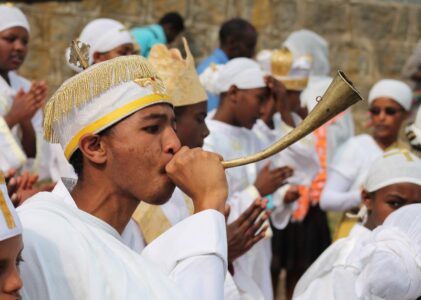
Ethiopia and it’s folk music and culture has a long step in the history of civilization. Ethiopia is the only country in Africa never to have been colonized. It can be said that it is one of the most unique folk music and also culture in the world. Folk music of Ethiopia is consist of many type music instruments with thousands years old which survived through the history. The music and culture of Ethiopia has been influenced by christian-ism, Islam, jewism and also Afros. 

Ethiopia has diverse number of ethnic groups ( more thank 75 ethnic groups ). Each ethnic group has it’s own traditional music and sounds.These folk musics have tighten with other cultured aspect of each ethnic group like dances, clothes, spirituality, wars and … .

Georgia

Georgian folk music is a living yet ancient tradition. Most songs, both sacred and secular, are sung unaccompanied in three-part harmony, symbolically associated with the Trinity. Unlike western music, the Georgian scale is based on the fifth rather than the octave. There are considerable regional differences in singing styles, and some songs, particularly from the Caucasus Mountains in the north of the country, are known to date from pre-Christian times.

Singing is an essential component of Georgia’s legendary hospitality and comprises a major part of the Georgian feast or supra. A supra can last for several hours and will include long and eloquent toasts, each followed by an appropriate song. There is considerable interest in Georgian singing among the young people of the country and all the major choirs support youth choirs of a high standard, whose members keep the tradition going.

Australia

Australia is a country rich in diversity, culturally and geographically, a richness embodied in our music which embraces all genres and styles, is both steeped in tradition, and at the forefront of innovation and experimentation.

TRADITIONAL

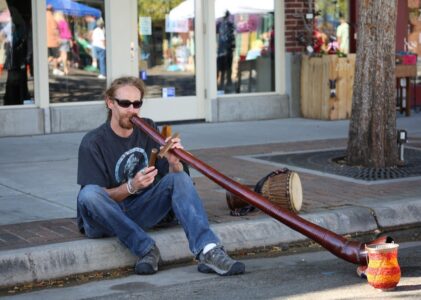
Music and song are inseparable in Indigenous cultures and part of unbroken traditions dating back thousands of years. Music is found in ceremony and important community activity in all Aboriginal and Torres Strait Island Cultures. Aboriginal songmen are revered custodians of the songs which represent rich and distinct oral traditions in each community. Sacred and secular songs are also integral to Torres Strait island life and can include western style harmonies derived from contact with other cultures.